Do Most NATO Countries Refuse to Pay Their Fair Share?
“Most European NATO members refuse to meet their defense spending obligations”
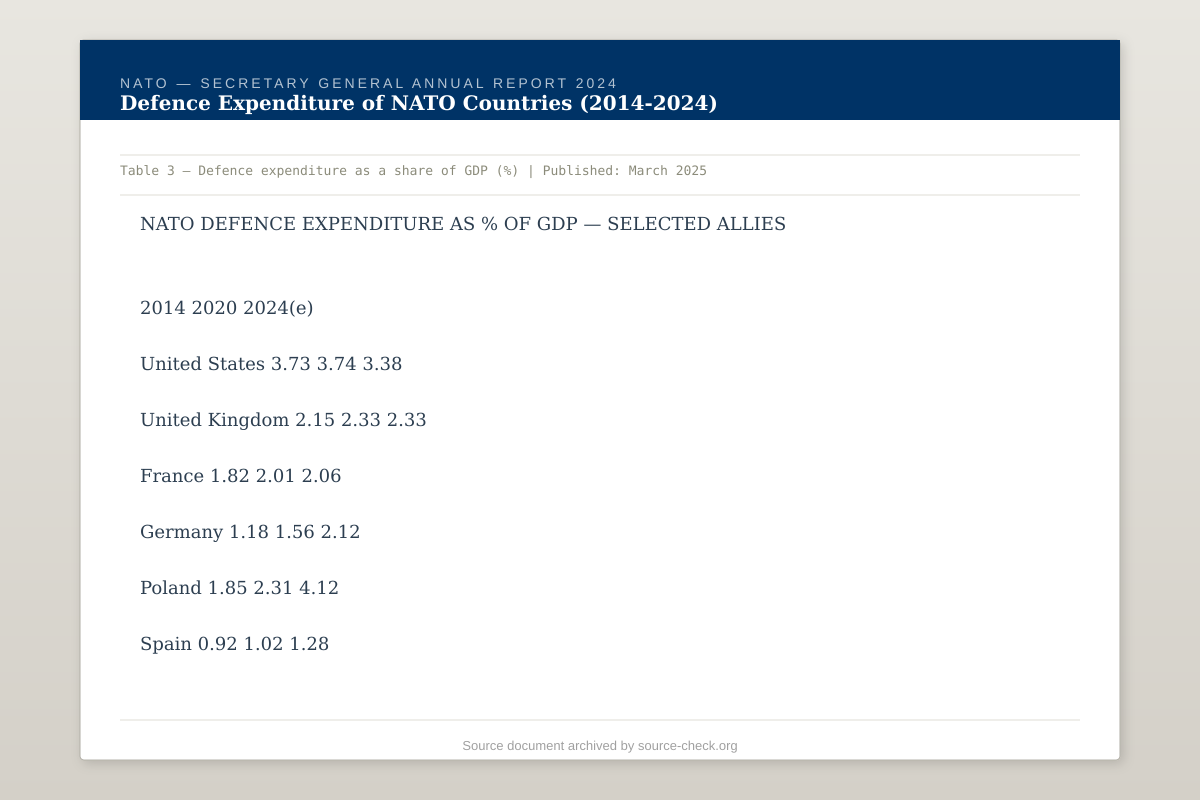
The 2% GDP target was a non-binding pledge set for 2024. By 2024, 23 of 32 members met or approached the target — up from just 3 in 2014. The framing of 'refusal' omits a decade of steady increases.
What They Are Saying
Politicians (particularly in the United States) frequently claim that European NATO members “refuse to pay their fair share” for defence, that America is “paying for Europe’s security,” and that allies are freeloading. This framing suggests a deliberate refusal by wealthy nations to honour a clear obligation.
Describing it as a “refusal to pay” misrepresents what the commitment actually is and ignores what has been happening over the past decade.
What The Documents Show
What the 2% Target Actually Is
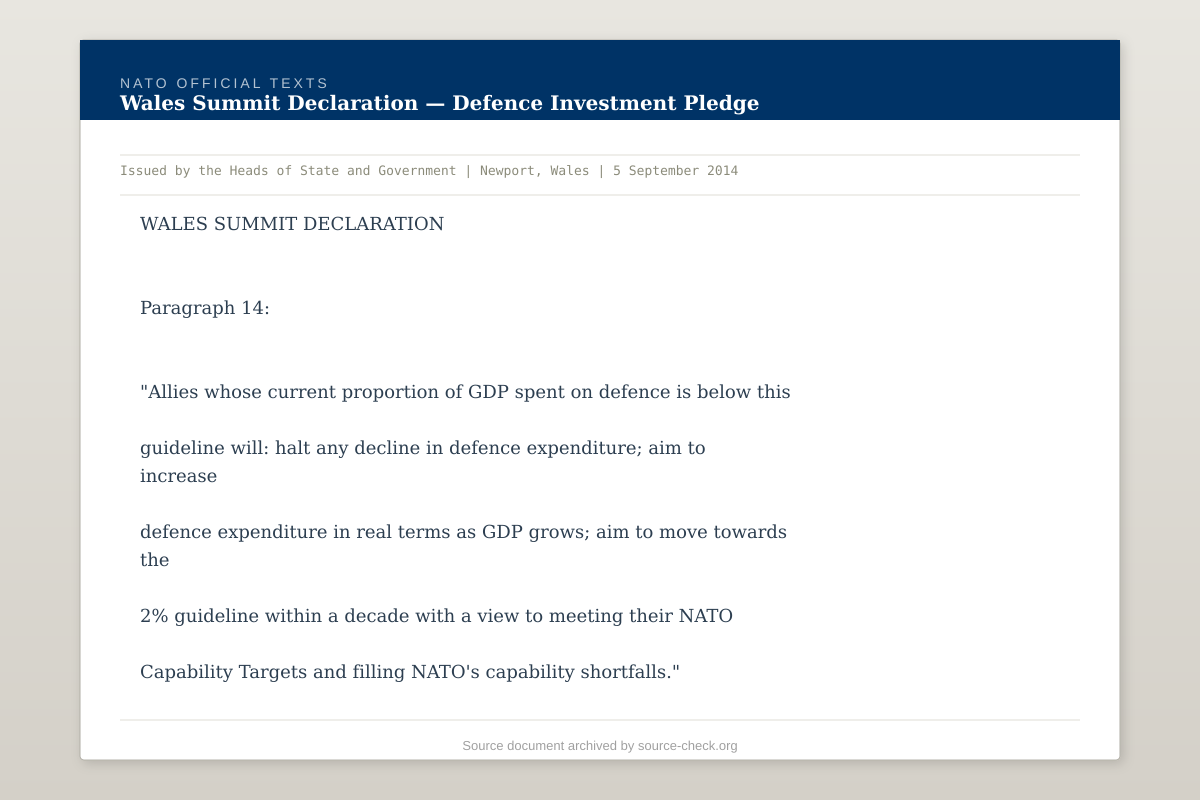
At the 2014 Wales Summit, NATO members agreed to “aim to move towards” spending 2% of GDP on defence within a decade (by 2024). Key facts about this pledge:
| Aspect | Reality |
|---|---|
| Legal status | Non-binding political commitment |
| Timeline | 10 years (2014-2024) |
| Language | ”aim to move towards,” not “must reach” |
| Context | Adopted after Russia’s annexation of Crimea |
This was not a bill, a treaty, or a mandatory payment. No country “owes” NATO money. Each nation funds its own military; NATO has a modest shared budget (about 3.3 billion EUR) that all members contribute to.
The Trend: Steady Increases
NATO’s own expenditure report shows the trajectory:
| Year | Members meeting 2% | Direction |
|---|---|---|
| 2014 | 3 of 28 | Starting point |
| 2017 | 5 of 29 | Increasing |
| 2020 | 9 of 30 | Increasing |
| 2022 | 7 of 30 | Slight dip |
| 2023 | 11 of 31 | Increasing |
| 2024 | 23 of 32 | Significant jump |
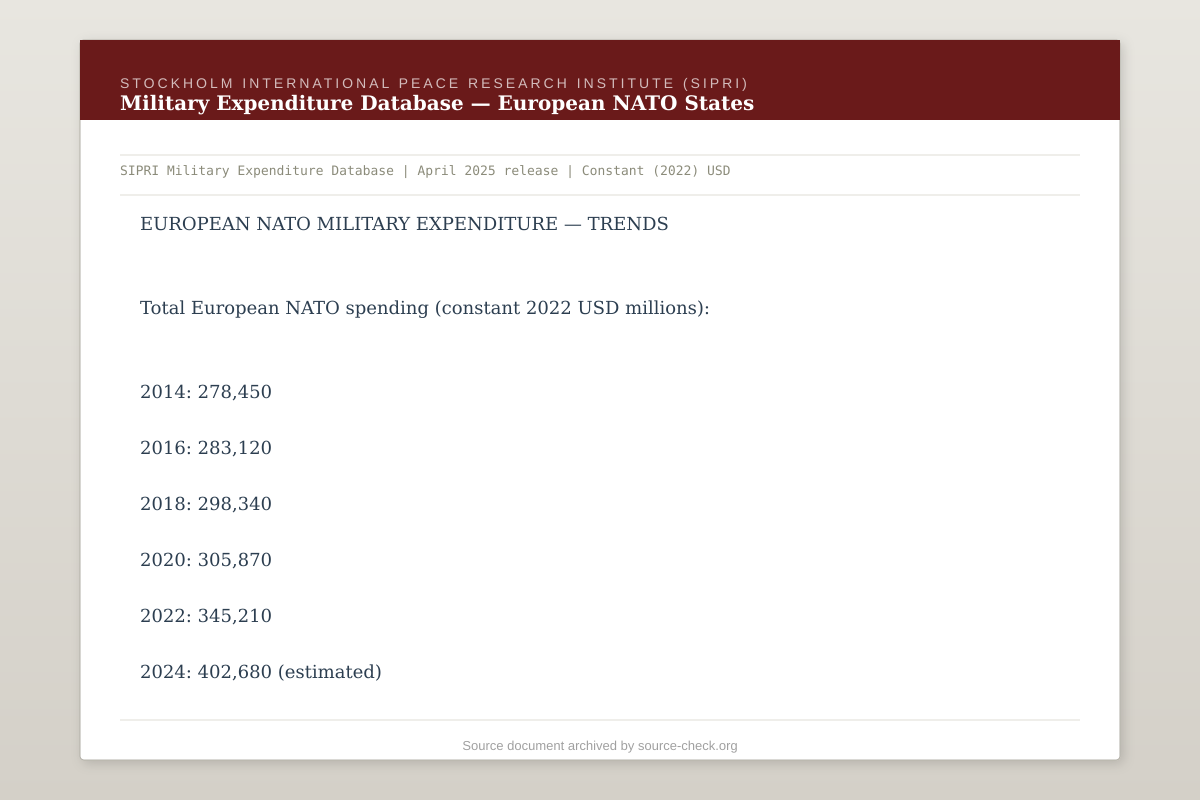
From 3 members meeting the target in 2014 to 23 in 2024. That is not “refusal.” That is a decade-long trend of increasing investment that accelerated sharply after Russia’s 2022 invasion of Ukraine.
What Gets Left Out
The “refusal to pay” framing omits several key facts.
The 2% was a goal, not a deadline. The pledge said “aim to move towards,” explicitly acknowledging it would take time. Spending has increased dramatically. European NATO allies increased defence spending by over 30% between 2014 and 2024 in real terms. The US spends more by choice. American defence spending funds global force projection, not just European security. The US has military bases in over 70 countries and maintains capabilities that serve American strategic interests worldwide. Non-financial contributions matter. Some allies contribute significant capabilities relative to size: intelligence sharing, strategic geography, specialised forces, logistics infrastructure.
The Manipulation Tactic
The framing presents a non-binding aspiration as a mandatory obligation. It ignores the significant upward trend in spending. It conflates total US defence spending (which serves global interests) with spending “for” Europe. It uses the word “refuse” to imply bad faith where the reality is gradual compliance.
This tactic is effective regardless of your views on NATO. Whether you think European defence spending should be higher or lower, using inaccurate framing manipulates your conclusion.
European NATO spending has increased substantially over the past decade. By 2024, 23 of 32 members met or approached the 2% target, up from just 3 in 2014. The claim that allies “refuse to pay” omits the non-binding nature of the pledge, the clear upward trend, and the broader context of what US defence spending actually funds.
NATO publishes the expenditure data every year. SIPRI provides independent verification. The numbers are public. Check them.
Sources & Documents
- View document
- View document
- View document